Blog

blog image

June 29, 2021

Good to know about whistleblowing

The new law on whistleblowing is coming soon. The interest is great, and the questions are many.  What should you as a corporate leader  do to comply with the law and get the greatest possible business impact. Lantero was invited to a webinar with Nordea Private Banking to share thoughts and experiences. You can see the result here divided into three short films (in Swedish), each focusing on a relevant area. Without going into too many details, it gives you a good overview of the challenges and the opportunities. Part one, what is the new whistleblowing law about?  https://www.youtube.com/watch?v=w58-_XqrSdA Part two, The whistelblowing process in four steps, that you should know about. https://www.youtube.com/watch?v=jGb3C-pVwvc Part three: What kind of reports can you expect and how do you maximize the positive impact when implementing a whistleblowing channel?  https://www.youtube.com/watch?v=Uwd6-HbQEWo
blog image

June 15, 2021

Will the legislation limit centralized Group-level whistleblower functions?

When the new whistleblower directive is implemented in Swedish legislation, it is proposed that Groups may not share reporting channels for subsidiaries with more than 249 employees. In a debate article (Swedish) in Dagens Industri, general counsels in a number of large Swedish companies raise the issue and call for a change in the proposed legislation. The argument is about increased bureaucratisation and that there are in fact greater opportunities for independent handling of disclosed cases if the function is centralized. The debate article makes important points and takes a practical perspective, where the new legislation risks creating more problems than it solves. However, it is worth considering what limitations are actually proposed. If, for example, separate reporting channels are established, the same administrator could possibly investigate cases for several Group companies if the assignments are regulated by separate agreements. Our assessment is that the procedure would be fully viable if it is an external law firm that staffs the whistleblower solution. But the question is whether it would not also be feasible to apply the same logic with an internal Group of Trustees at the Group Head Office.
blog image

June 3, 2021

Swedish implementation of EU Whistleblower Directive

The proposal for the Swedish implementation of the EU Whistleblower Directive went to the Legal Affairs Council in mid-April. The proposal was accepted without further comments by the Legal Affairs Council and a final bill could therefore be presented on 25 May. (Read more here, in Swedish) There are no big surprises in the proposal, but compared with the previous Swedish whistleblower law (which is now being replaced) there are some changes. Most noticeably, it will be mandatory for organizations with more than 50 employees to set up a whistleblower channel, including some specific requirements on how reporting can take place and requirements on independent handling of disclosures. What is considered a "whistleblower case" is also changed and broadened. An important change in the wording is that there should be a public interest in the information coming out. What is considered public interest is not entirely clear, but overall the threshold for what can be reported is lowered, at the same time as the lawmaker aims at getting rid of matters concerning individuals and focus more on systematic misconduct. According to the proposal, the law will enter into force on 17 December, 2021.
blog image

May 21, 2021

Press conference on strengthened protection for whistleblowers

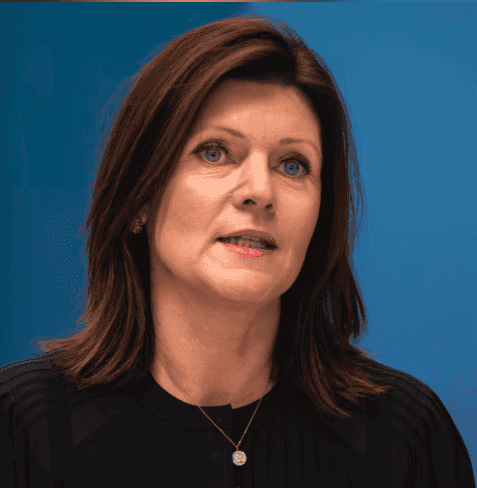
On 20th May 2021, Minister of Labor Eva Nordmark held a press conference to talk about the forthcoming law on strengthened protection for whistleblowers. The bill that is presented is largely in accordance with the EU directive and the Swedish investigation that forms the basis for the law. The messages emphasized in the press conference are: - The ”Meddelarskyddet” that already exists today is not affected, the new law will complement this, and replace the whistleblower law that already exists today. - The new law means that the protection is now extended to apply to all employers, in both public and private sectors. - It becomes clear to employers that they have an obligation to make it easy for their employees to report and to handle the reports that come in via internal whistleblower channels, otherwise they break the law. The difference from the current whistleblower law is described as an extension from previously including only protection for the whistleblower to also include a clear process on how whistleblower reports should be handled. It is not clear what the concept of clear process will mean. Feedback, follow-up and contact with the whistleblower are actions that is mentioned. The requirement for confidentiality regarding the whistleblower is also mentioned. But there is no mention of the requirement for an independent and autonomous investigation. Something that has been clear in the directive and the Swedish investigation. View the press conference here
blog image

April 28, 2021

Whistleblower systems procured through framework agreements

Authorities often put a lot of time and effort into understanding complex issues in order to be able to set relevant procurement requirements. Although the cost of a whistleblower system is quite low. Many times the responsible people don't take advantage of the existing framework agreements, which can greatly facilitate the process and reduce the work.  Whistleblower systems have been included in several Swedish framework agreements for several years, through the Swedish Chamber of Commerce and SKR, but so far few have used the opportunity. Redpill Linpro tells more about the theme here.
blog image

April 26, 2021

Whistleblower awarded for exposing corruption within the fishing industry

As head of the fishing company Samherji, Jóhannes Stefánsson understood that the company was involved in widespread corruption linked to fishing quotas in Namibia. He left the company in protest and then came to expose the misconduct within his own company and other parts of the industry in "The Fishrot Files". The ensuing debate shook the industry and toppled two Namibian ministers, among others. Jóhannes Stefánsson now wins the prestigious sustainability award "WIN WIN Gothenburg Sustainability Award 2021" and a prize sum of one million Swedish kronor for the unveiling. Read more here. (Swedish)
blog image

April 7, 2021

Long road ahead to implement EU Directive

In December this year, the new EU directive on whistleblowing will be implemented in national legislation within the Union. However, many countries are lagging behind in the work. In February this year, two-thirds of all EU countries had either not started the work, or had just initiated it. For Sweden, the preliminary legislation proposal was for a consultation round from last summer until mid-October 2020, which means that Sweden is far ahead compared with the rest of the Union. At the same time, it should be mentioned that the legislative process differs between the countries, for example in terms of consultation procedures. Furthermore, countries that haven't come as far can start from the work done by, for example, Sweden. This makes both the process potentially faster and provides the conditions for more uniform implementation within the Union.
blog image

March 23, 2021

Gloomy development regarding bribes in Sweden

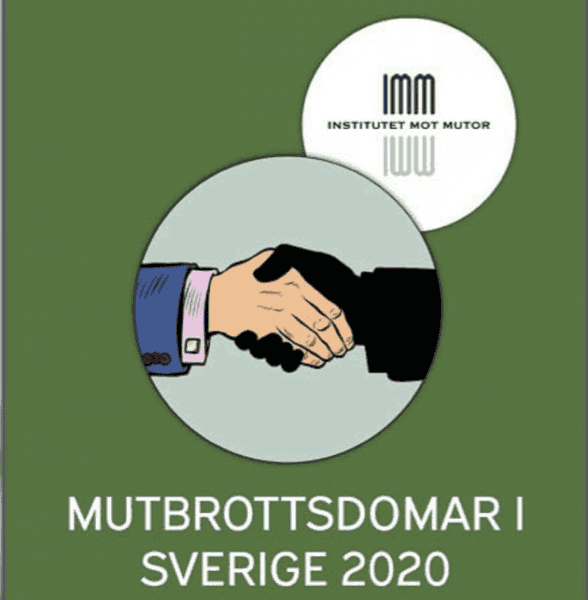
Since 2010, the Swedish Institute against Bribery (IMM) has continuously collected and summarized lawsuits about bribery. The purpose is, among other things, to provide an idea of ​​what corruption can look like in individual industries and make it easier for the business community to assess the corruption risks that may arise. The compilation for 2020 (Swedish) constitutes a particularly gloomy reading as the sum of the total bribes during the year increased by 246 per cent compared with the previous year. The actual extent of the problem of attempted bribery is naturally impossible to know. Typical cases concern different types of government officials, such as driving examiners, prison staff or decision-makers in government agencies. The pattern is typical and confirms the picture that corruption risks tend to arise where the public sector encounters private citizens or companies. The work against corruption should be conducted widely. From the business side, it is important to have knowledge of risk areas and actively work with attitudes within the organizations. From the public sector, there should be a long-term ambition to reduce incentives by limiting the value of transfers managed by individual civil servants, especially in areas that open up for arbitrary assessments. The very sharp increase in the numbers is in itself very ominous and points to a turning point where a traditionally low Swedish acceptance of cheating seems to be fading. It thus becomes more and more up to authorities and companies to work with organizational cultures when society is unable to maintain its common values.
blog image

February 11, 2021

No action in Swedish Government's anti-corruption plan

According to Claes Sandgren, professor emeritus in civil law at Stockholm University, the Swedish government's action plan against corruption is not enough. In a debate article on DN Debatt (Swedish) he criticizes the plan for lacking substance, not being an actual plan and without any actionable commitment.  Sandgren further believes that the "action plan's" focus on the state level is unfortunate, as 80 percent of public procurement in Sweden pertains to municipalities. Despite the fact that Sweden is often viewed as a country with low corruption (see previous blog post), the EU Barometer 2019 shows that three out of ten companies believe that in the last three years they have lost public procurement contracts due to corruption. – The municipal procurement is carried out to a significant extent by the publicly owned companies, which are governed by politicians and civil servants who also have assignments in bodies that review the procurements, Sandgren says. Public Affairs Magazine (Swedish) also reports on criticism from Transparency International, which calls on the Government to supplement its plan with action.
blog image

February 10, 2021

Transparency International's latest corruption perceptions index

Europe remains the least corrupt region in the world, according to Transparency International's latest report. The report only measures perceived corruption in the public sector and not the actual underlying corruption, but should still be seen as a reasonable estimate of the situation in the world. Furthermore, the figures are produced annually and with the same model, which means that the general development can be followed quite well. New Zealand and Denmark are at the top, while Sweden, Finland, Switzerland and Singapore share third place. The Nordic region is generally well placed in the survey, although this blog has previously pointed to a partially inflated self-image in Sweden. In addition, the Nordic countries have societies with large public sectors, which in itself tends to increase the risks of corruption. Seen over a few years, the development has gone in the wrong direction in Hungary, Poland and Malta, among others, while Italy, Estonia and Greece stand out as positive examples in Europe.
5of 6